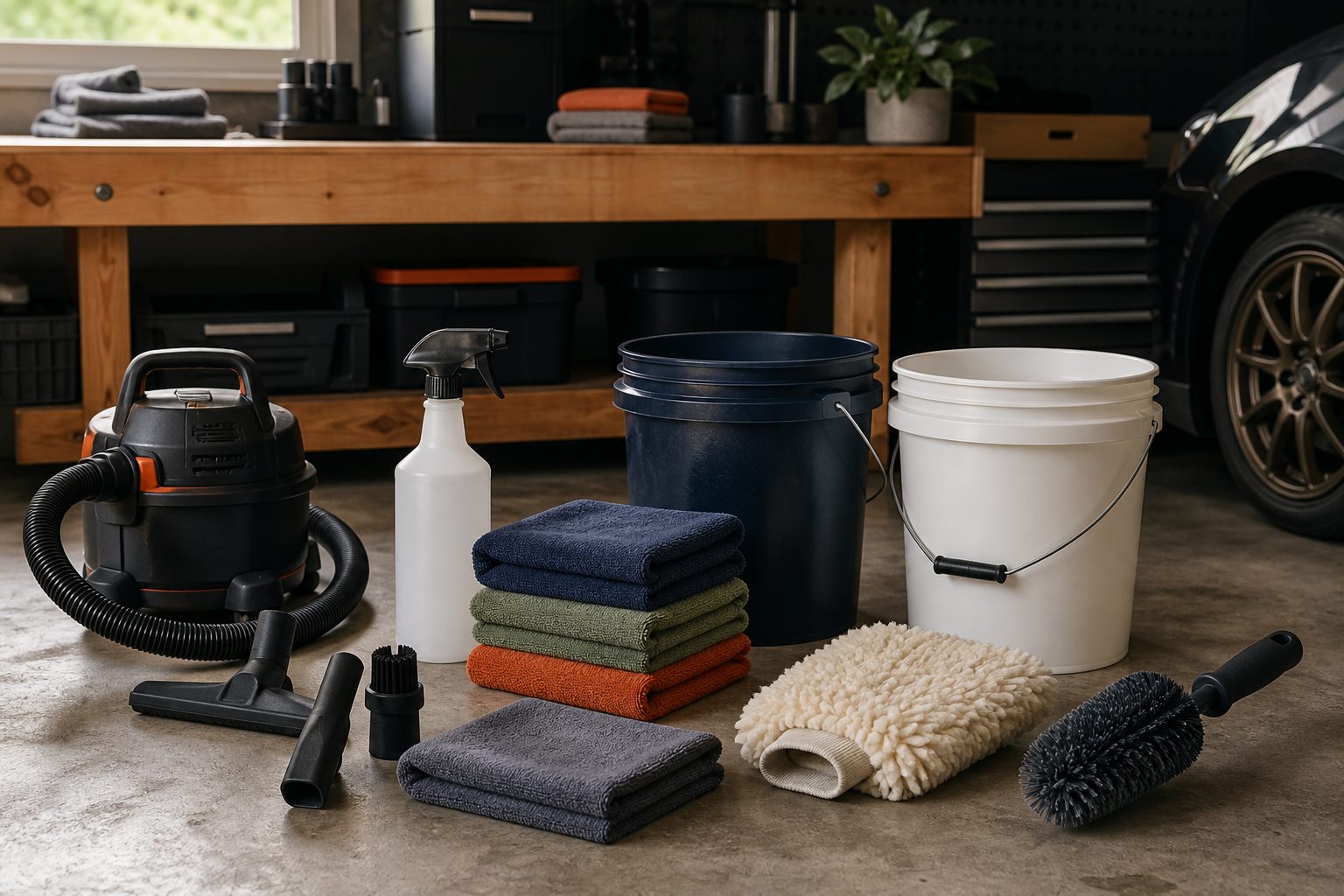
Start with six things: a wash medium, pH-neutral soap, two buckets or a rinseless bucket, drying towels, an interior towel set, and a small vacuum. Add specialty chemicals only after a basic process reveals a specific problem.
The useful starter kit is smaller than the internet suggests
A good first kit supports a repeatable wash, dry, and interior reset. It does not need a shelf of overlapping cleaners. The simplest way to control cost is to give every bottle and tool one clear job, then wait until that job is actually limiting your result before upgrading.
For most drivers, the core kit fits in one 5-gallon bucket. Choose products by the surface you need to protect—not by how dramatic the label looks. A neutral car shampoo, soft wash medium, absorbent drying towel, separate interior towels, glass towel, wheel brush, and vacuum cover nearly every routine task.
- One wash bucket plus a grit guard—or one bucket for a rinseless wash
- A pH-neutral wash solution
- Two drying towels so a dropped towel never goes back on paint
- Color-coded microfiber towels for paint, interior, glass, and dirty jobs
- A soft wheel brush and separate wheel towel
- A compact wet/dry vacuum with useful attachments
Level one: apartment and parking-lot kit
When water and power are limited, prioritize portability. A rinseless wash solution, pump sprayer, multiple clean microfiber towels, drying towel, interior cleaner, glass towel, and cordless hand vacuum can travel in one lidded tote. The process matters more than pressure: pre-treat the dirtiest lower panels, use many clean towel faces, and stop when grit is too heavy for a low-water method.
Check your lease and local runoff rules before working in a shared parking area. When the car is heavily salted or muddy, a commercial wash is usually the safer first step; finish the detail later in an allowed location.
Level two: the practical driveway upgrade
Add a hose nozzle, second bucket, longer wheel brush, wet/dry vacuum, and a simple spray protectant. This improves speed without changing the basic technique. A pressure washer can be helpful, but it is not the first upgrade for most people; reliable shade, enough hose reach, and a thoughtful towel system usually remove more friction.
Keep electrical connections dry and follow the equipment manufacturer’s instructions. Outdoor washing also creates runoff, so use soap sparingly and keep wash water away from storm drains. A commercial wash remains the best option where local rules prohibit driveway washing.
Level three: buy for bottlenecks, not for completeness
Only add a machine polisher when you understand safe washing and want to correct paint defects. Add an extractor when fabric seats or family use create a recurring deep-cleaning need. Add a pressure washer when setup time, hose control, or cleaning larger vehicles is the real bottleneck.
A useful upgrade should either improve safety, save meaningful time, or produce a result your current kit cannot. If it only duplicates a cleaner or brush you already own, leave it on the shelf.
A simple storage system
Store liquids upright in a shallow spill tray, keep towels clean and dry in sealed bins, and label dilution bottles with the product, ratio, and date mixed. Separate wheel and engine-bay tools from paint tools. A small kit that is always clean and ready will be used more often than a large collection that requires sorting before every wash.
SOURCES & FURTHER READING
COMMON QUESTIONS
Frequently asked questions
How much should a beginner detailing kit cost?+
Build it in stages. A basic hand-wash and interior kit can be modest; machines raise the budget quickly. Buy the process essentials first and price specialty tools only after you identify a recurring need.
Do beginners need a pressure washer?+
No. A hose with a shutoff nozzle, a careful hand-wash process, and good towels are enough for routine maintenance. A pressure washer is a convenience upgrade, not a requirement.
Can one microfiber towel be used everywhere?+
It is better to separate towels by task. Paint, glass, interior, wheels, and very dirty jobs have different contamination risks and absorbency needs.

We check guidance against source material, equipment instructions, and our published editorial standards. Read the policy →