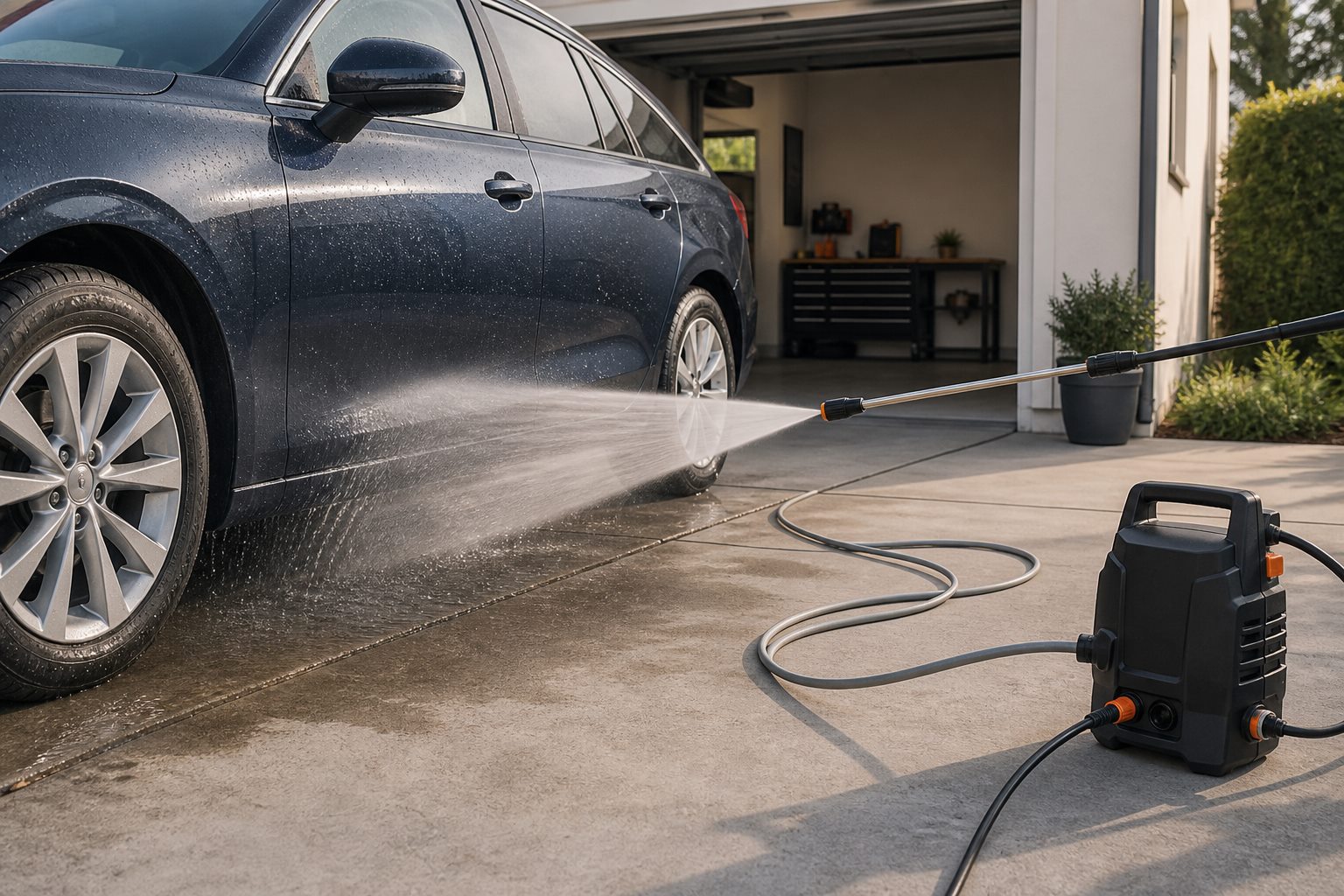
PSI describes pressure; GPM describes water flow. For car washing, controllable pressure, adequate flow, a wide fan nozzle, reliable fittings, and safe working distance matter more than chasing the largest PSI number.
Pressure breaks the bond; flow carries debris away
Pressure helps loosen contamination while flow moves loosened dirt off the surface. A machine with high advertised PSI but weak flow may feel sharp without rinsing efficiently. For cars, the goal is controlled cleaning across a wide fan—not concentrated force.
Manufacturer ratings are useful for sorting models but do not predict the full experience. Hose length, nozzle quality, inlet water supply, fittings, pump behavior, and where the trigger feels comfortable all change how the system works in a driveway.
Start with the least aggressive setup
Read both the vehicle-care and pressure-washer manuals. Begin with a wide fan nozzle at generous distance on a small inconspicuous area. Never use a zero-degree nozzle on a vehicle. Avoid aiming directly into damaged paint, seals, electrical connectors, cameras, sensors, or soft convertible-top edges.
A complete setup matters more than the motor
Budget for hose reach, quick-connect fittings, a stable foam device if desired, and storage that protects the hose from kinks. An easy-to-deploy machine gets used; a powerful unit buried behind seasonal storage does not.
Electric models are usually the practical home-detailing choice because they are quieter, simpler to start, and adequate for routine rinsing. Gas machines can provide more performance but add exhaust, fuel, noise, and maintenance considerations that are rarely justified for car-only use.
Water and electricity need a plan
Use outdoor-rated equipment, keep plugs and connectors away from standing water, and follow ground-fault protection requirements applicable to your outlet and equipment. Never handle a wet connector. If the site layout cannot keep power connections protected, choose another method.
Route runoff away from storm drains and use soap sparingly. Local restrictions can be stricter than general guidance, so check municipal rules during droughts or in regulated stormwater areas.
The buying checklist
Choose by usable hose length, stable low-end pressure, fan-nozzle availability, fitting standard, replacement part access, total storage footprint, and noise. Then compare PSI and GPM within the machines that pass those practical filters.
- Wide fan nozzle included
- Enough hose to circle the vehicle without dragging the machine
- Standard fittings or readily available adapters
- Protected cord and hose storage
- Trigger that can be used comfortably
- Local service or replacement-part availability
SOURCES & FURTHER READING
COMMON QUESTIONS
Frequently asked questions
Is 2,000 PSI too much for a car?+
A rating alone does not define safety. Nozzle angle, distance, actual output, surface condition, and technique matter. Start with a wide fan at a generous distance and follow both equipment and vehicle guidance.
Is GPM important for washing cars?+
Yes. Flow helps carry loosened dirt away and affects rinsing speed. Compare it together with controllable pressure and the complete hose/nozzle setup.
Do I need a foam cannon?+
No. It can improve coverage and make the process enjoyable, but a careful pre-rinse and hand wash can clean effectively without one.

We check guidance against source material, equipment instructions, and our published editorial standards. Read the policy →