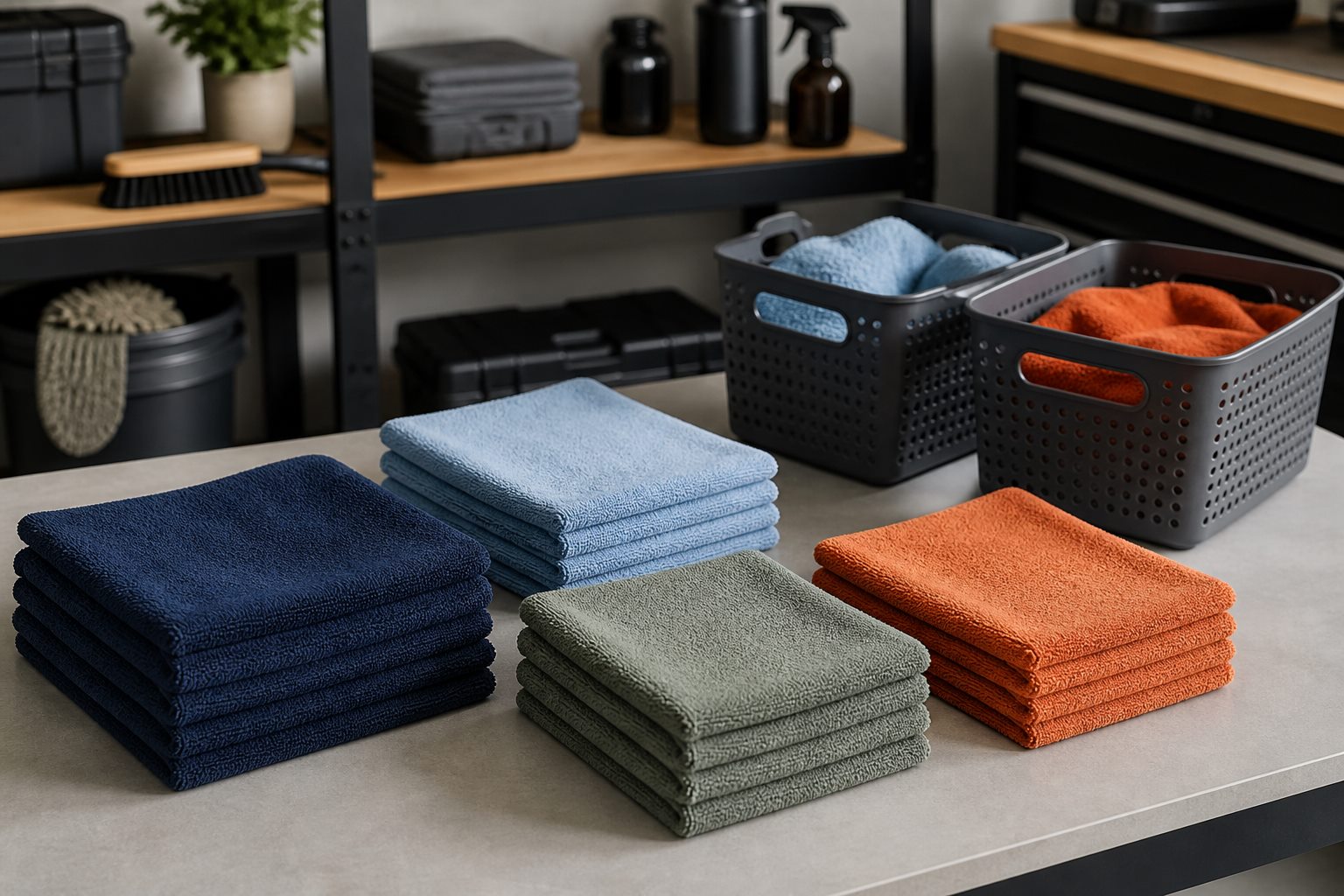
Use four groups: soft paint towels, absorbent drying towels, low-pile glass towels, and utility towels for interiors or dirty work. Color-code them, store clean towels sealed, and permanently demote any towel that touches the ground or collects sharp debris.
A system prevents cross-contamination
The biggest benefit of multiple towel types is not collecting colors—it is keeping wheel grime, interior protectant, glass residue, and paint contamination apart. Assign each towel a job and make the category obvious enough that anyone in the household can follow it.
Four bins or labeled sections are enough: paint, drying, glass, and utility. Wheel and engine-bay towels can live in the utility group but should never return to paint duty.
Match weave to the task
Soft plush towels are useful for rinseless washing and gentle exterior wiping. Twisted-loop or similarly absorbent towels make efficient drying tools. Short, tight weaves reduce lint on glass. General-purpose low- or medium-pile towels suit dashboards, door jambs, and utility work.
Weight and pile are not universal quality scores. Edge construction, absorbency, softness after repeated laundering, and how a towel behaves with your product matter more than a single GSM number.
How many towels do you need?
For one normal-size car, start with eight paint-safe wash or removal towels, two drying towels, four glass towels, and eight utility towels. Adjust after several details. Rinseless washing needs more clean faces; a traditional wash mitt process may need fewer paint towels but still benefits from backups.
Wash without leaving residue
Wash detailing towels separately from cotton and lint-producing laundry. Use a fragrance-free liquid detergent without fabric softener, follow the towel manufacturer’s temperature guidance, and choose an extra rinse when residue is a concern. High heat and softener can reduce performance.
Air-dry in a clean place or tumble dry on the recommended low setting. Move fully dry towels into sealed storage. Open shelving looks convenient but slowly collects garage dust.
The retirement ladder
Paint towels become interior towels; interior towels become door-jamb towels; the final stop is wheels, exhaust tips, spills, or disposal. Mark demoted towels with a corner snip or permanent marker so they never migrate upward again.
COMMON QUESTIONS
Frequently asked questions
Can microfiber towels go in the dryer?+
Usually on low heat if the manufacturer allows it. Avoid high heat and dryer sheets, which can damage fibers or leave residue.
Should I wash glass towels separately?+
Keeping them separate can reduce lint and product transfer. At minimum, do not wash them with greasy utility or wheel towels.
How often should detailing towels be replaced?+
Replace or demote them when they stay rough, lint excessively, retain contamination, or stop performing after proper washing. Time alone is not the best measure.

We check guidance against source material, equipment instructions, and our published editorial standards. Read the policy →