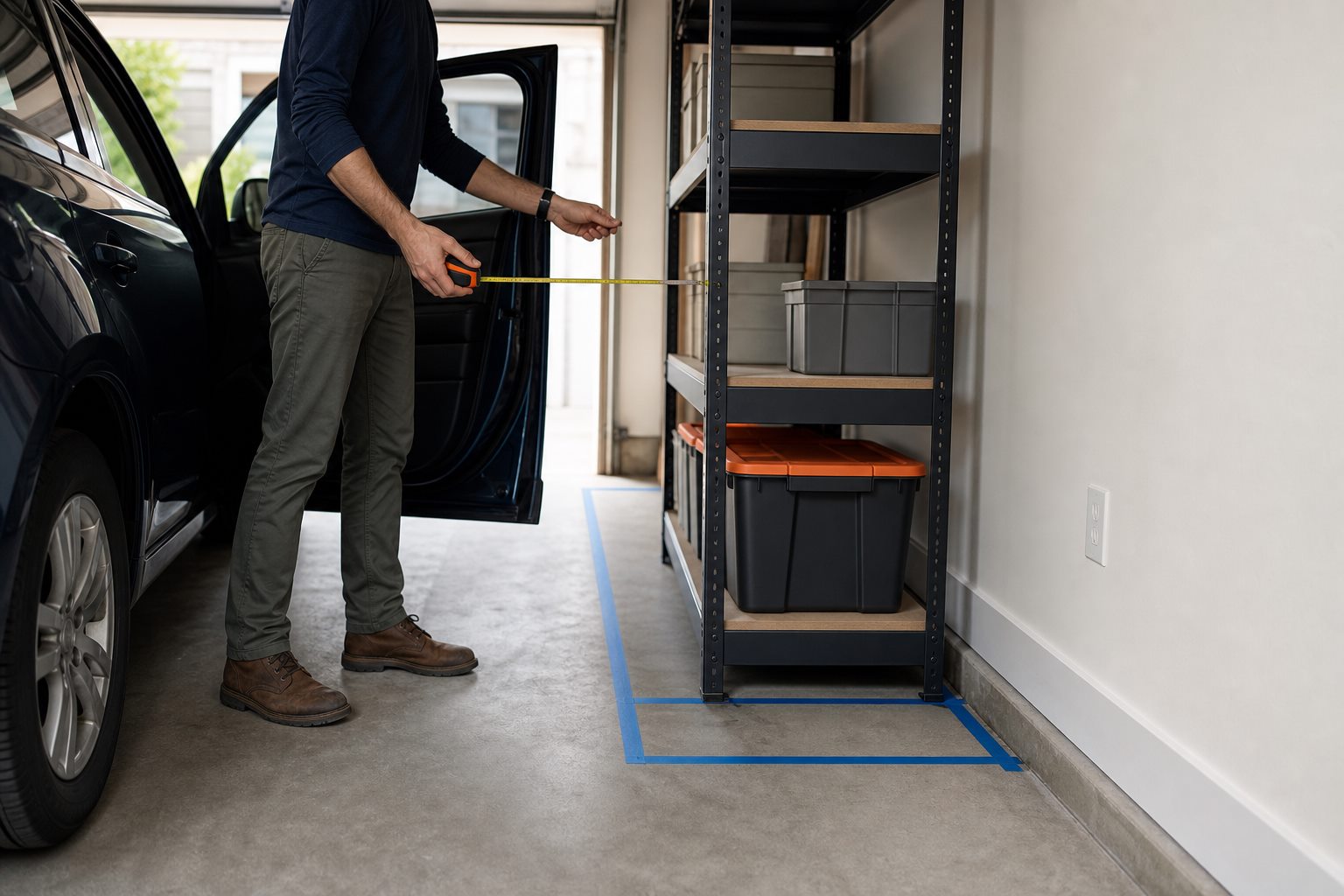
Measure the garage with the vehicle parked and doors open. Record usable wall width, maximum safe depth, baseboard or curb interference, outlet locations, door and track movement, floor slope, and the actual weight of planned bins before choosing shelves.
Measure the occupied garage
An empty garage exaggerates available space. Park the largest vehicle in its normal position, open each door to the width your household uses, extend mirrors, and walk the grocery-to-house path. Mark the clearance that must remain.
Repeat the check with the garage door moving. Tracks, springs, opener arms, sensors, electrical panels, attic hatches, and windows need access. Treat those service zones as unavailable storage space.
Depth is the critical number in narrow garages
Common deep shelves hold large bins but can make a driver squeeze past paint and metal edges every day. A shallower shelf with smaller labeled bins may store slightly less while making the whole garage easier to use.
Tape the proposed shelf footprint on the floor for several days. If people step over the line, doors cross it, or mirrors feel close, reduce the depth before buying.
Load ratings need context
Check whether a rating is per shelf or for the entire unit, whether it assumes evenly distributed weight, and whether wall anchoring is required. Add the weight of containers, not just their contents. Concentrated loads can behave differently from evenly spread boxes.
The floor must also be stable and reasonably level. Garage slabs often slope toward the door. Use only manufacturer-approved leveling and anchoring methods; improvised shims can create a tipping risk.
Match shelf material to the environment
Steel frames are strong but can rust if coatings are damaged. Particle-board decks can swell after leaks. Wire shelves allow airflow and shed dust but let small parts fall through. Plastic resists many damp conditions but has different heat and load limits.
Choose based on moisture, cleaning, fire-safety needs, stored chemicals, and how often the shelf will be moved—not appearance alone.
Seven numbers to take shopping
Write down usable width, maximum depth, preferred shelf height, lowest obstruction, highest obstruction, heaviest planned bin, and total planned load. Add a photo of outlets, trim, and floor transitions. This one page prevents most returns.
COMMON QUESTIONS
Frequently asked questions
How deep should garage shelves be?+
Use the deepest shelf that preserves safe vehicle-door and walking clearance in the occupied garage. In narrow spaces, shallower shelving is often the better system.
Do freestanding garage shelves need anchoring?+
Follow the manufacturer’s requirements. Many units require or strongly recommend anchoring, particularly where tipping, children, uneven floors, or seismic risk are concerns.
Should heavy bins go on the top shelf?+
No. Keep heavy items low to reduce tipping and lifting risk. Reserve upper storage for lighter, infrequently used items.

We check guidance against source material, equipment instructions, and our published editorial standards. Read the policy →