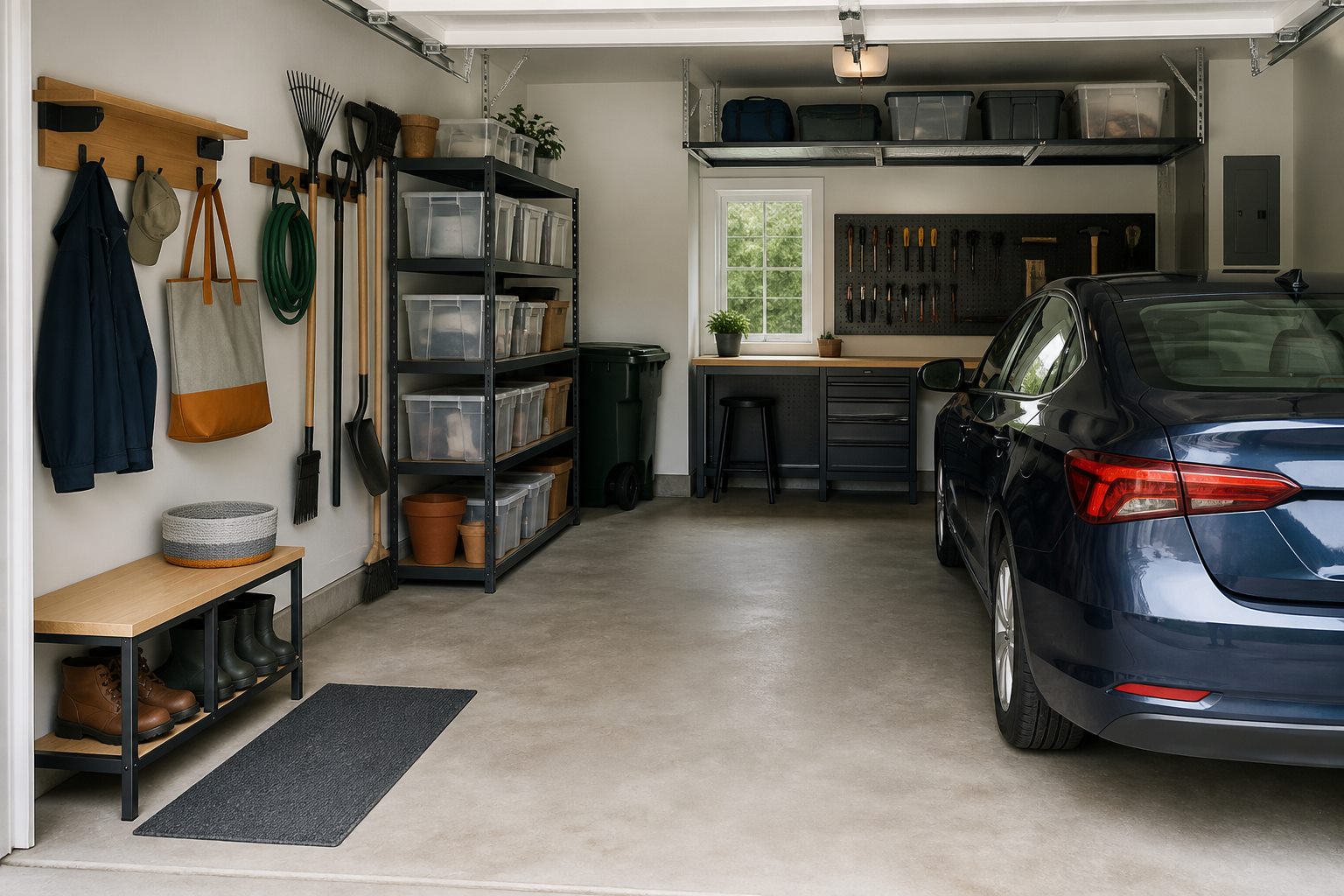
Divide the garage into arrival, daily-access, work, seasonal, and hazardous-material zones. Put frequently used gear between waist and eye level, heavy items low, seasonal items high, and chemicals in appropriate secure storage away from heat and children.
Design around movement before storage
A garage fails when storage consumes the path needed to park, open doors, carry groceries, or reach the house. Mark the vehicle footprint and walking path first. The remaining wall and ceiling areas are the true storage budget.
Measure with the vehicle parked, mirrors out, doors opened to the normal width, and the garage door moving. A shelf that fits an empty garage can become a daily collision point once the car returns.
Zone one: arrival
The area near the house door handles things that enter and leave every day: shoes, reusable bags, dog leashes, umbrellas, and small delivery items. A narrow shelf, tray, and hooks can prevent these objects from migrating onto a workbench.
Zone two and three: daily access and work
Place frequently used car-care supplies, hand tools, and chargers between waist and eye level. The work zone needs a clear horizontal surface, task lighting, and nearby storage for the few tools used most. Keep the bench intentionally shallow if vehicles pass close by.
Use drawers or labeled bins for small parts. Open pegboards are excellent for tools used weekly, but rarely used pieces collect dust and visual clutter. Give every visible hook a reason.
Zone four: seasonal and bulky
Upper shelves and approved ceiling racks suit light, bulky, infrequently used items. Do not exceed rack, ceiling, or fastener ratings, and do not place heavy bins where lifting becomes unsafe. Transparent bins or large front labels prevent repeated unloading.
Keep garage-door tracks, openers, lighting, fire-safety equipment, and attic access unobstructed. Storage should not create hidden maintenance problems.
Zone five: chemicals and risk
Automotive fluids, cleaners, batteries, sharp tools, and fuel require storage that follows their labels and local fire rules. Keep incompatible products separated, containers closed, and spill supplies nearby. Do not store propane cylinders or gasoline simply wherever there is an empty corner.
If children or pets can access the garage, secure chemicals and cutting tools. A neat shelf is not the same as controlled access.
COMMON QUESTIONS
Frequently asked questions
What should be stored first in a small garage?+
Protect the parking and walking paths first, then give daily-use items easy wall access. Seasonal items can move higher only after load and access safety are checked.
Are ceiling racks good for heavy storage?+
They can be appropriate only when the structure, installation, and rack are designed for the load. Keep very heavy items lower to reduce lifting risk.
How deep should garage shelves be?+
Choose depth from the available clearance with the car and doors in normal positions. Shallower shelves often work better on the vehicle side of a narrow garage.

We check guidance against source material, equipment instructions, and our published editorial standards. Read the policy →